Healthcare operations rarely stand still. As organizations expand across locations, integrate acquired practices, adopt new technologies, or adjust to changing patient demand, the way administrative work gets done must evolve.
What works for one location may not translate easily across an entire organization. Processes differ, responsibilities overlap, and even routine tasks can become more difficult to manage as operations grow.
For healthcare leaders, the challenge is not simply adding capacity. It's ensuring that workflows remain consistent, responsibilities are clear, and work continues moving as operating needs change.
At Xillium, practical experience helps shape how services are developed and refined to address these challenges.
Why One-Size-Fits-All Doesn't Work
Healthcare organizations may share similar administrative responsibilities, but the way those responsibilities are managed can vary significantly.
A multisite physician group may need greater consistency in referral processing across locations. An MSO integrating acquired practices may be working to standardize procedures while existing teams continue their daily responsibilities. A health system implementing new technology may need additional support managing handoffs and exceptions during the transition.
Each situation calls for a different approach.
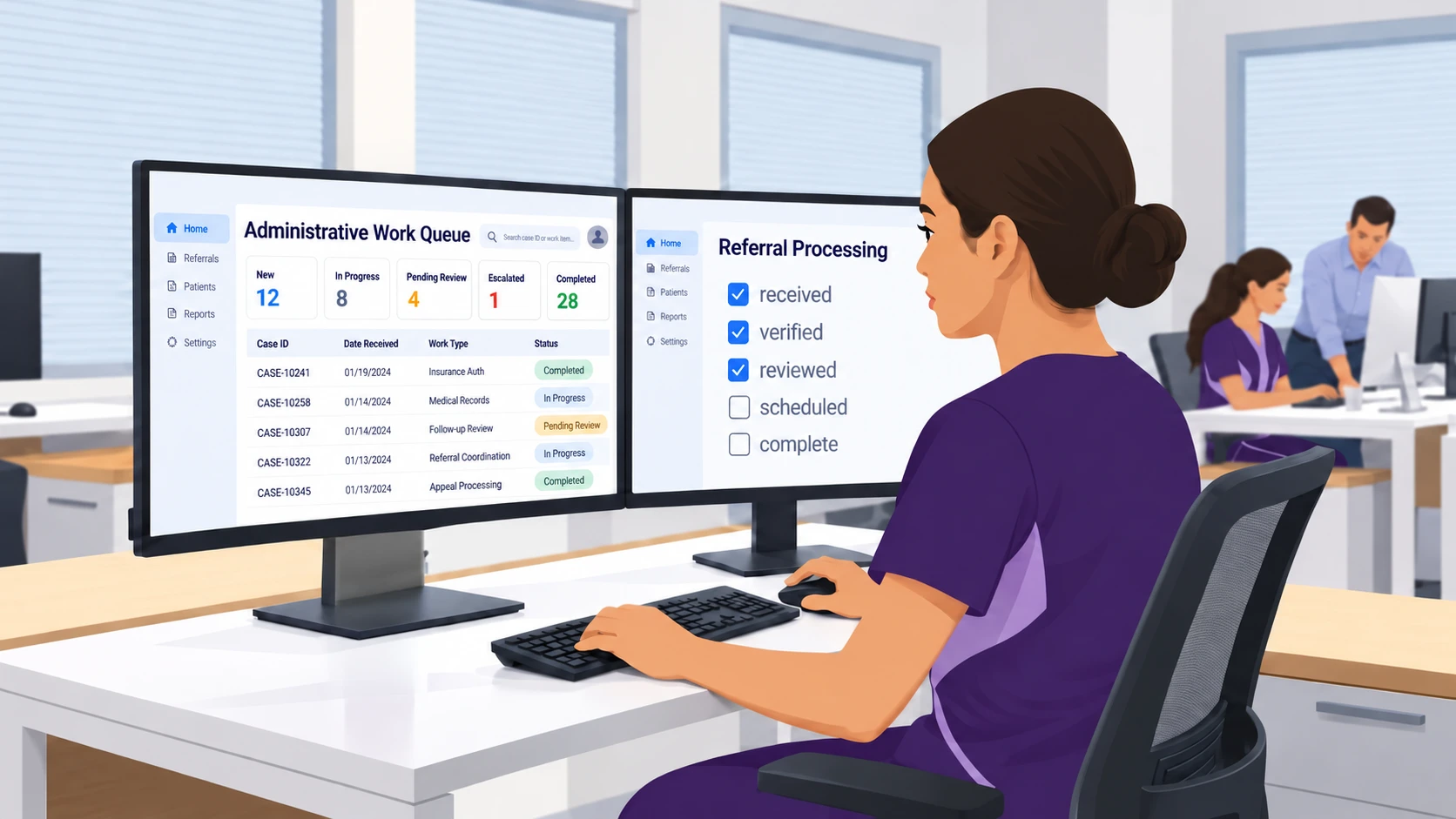
Effective operational support begins with understanding the work itself: how tasks move through existing systems, where delays occur, who owns each step, and what happens when something requires additional attention.
This allows support to be structured around defined workflows rather than forcing organizations into a standard service model that may not fit their operating environment.
How Operational Needs Shape New Services
Some of the most useful service innovations come from recurring challenges observed in day-to-day healthcare operations.
At Xillium, these needs have informed several approaches to maintaining continuity and managing administrative work.
Overnight Service
For some organizations, administrative work continues accumulating after regular business hours. Documentation, work queues, and other processing requirements may need attention before the next day's operations begin.
Xillium's Overnight Service supports defined workflows outside daytime hours, helping organizations prepare work for the next operating day and manage accumulated queues.
The value is not simply extending working hours. It's organizing when work gets done and how responsibilities are handed off between teams.
No Absentee Service
Continuity can become difficult when assigned personnel are unexpectedly unavailable, particularly when critical responsibilities depend on a small number of individuals.
Xillium incorporates backup coverage and cross-training into its delivery model to help maintain service continuity during planned and unplanned absences within its own teams.
This approach makes continuity part of the operating structure rather than relying entirely on an individual's availability.
Leave Support
Healthcare organizations also face coverage challenges when their own employees take extended leave or become temporarily unavailable.
Xillium's Leave Support Service addresses defined administrative responsibilities during these periods, with support structured around the client's existing systems, workflows, and operating requirements.
The focus is on maintaining ownership of essential work and managing transitions without requiring organizations to rebuild their processes around a temporary absence.
These services address different operational needs, but they reflect a common principle: practical solutions begin with understanding where work is vulnerable to interruption and how continuity can be maintained.
Turning Adaptability Into Accountable Execution
Designing flexible services is only part of the work. Those services also need a structure that supports consistent execution.
Before an engagement begins, responsibilities, workflows, service expectations, and escalation paths must be defined.
Personnel need to understand the systems they will use, the procedures they are expected to follow, and when an issue should be referred to the appropriate client representative.
Management oversight, performance monitoring, and documented handoffs help make the work visible and provide opportunities to identify issues before they become larger operational problems.
This is particularly important for enterprise organizations managing operations across multiple locations, departments, and service lines.
Adaptability should not mean a different process every time circumstances change. It should mean having an operating model that can respond to new requirements while preserving clear ownership and accountability.
Improving Services Through Operational Experience
Healthcare operations continue to evolve after a service is introduced.
Changes in volume, technology, organizational structure, or client requirements can reveal new bottlenecks and opportunities for improvement.
Feedback from client teams, operational reviews, and day-to-day experience can help identify where procedures need adjustment, responsibilities require clarification, or additional oversight is necessary.
A workflow that performs well in one environment may need to be refined when extended to additional locations or integrated into a different system.
The ability to recognize those differences and respond appropriately is what makes continuous improvement meaningful.
Rather than treating a service as a fixed offering, the objective is to keep its execution aligned with the work it is meant to support.
Practical Innovation Starts With the Work
Innovation in healthcare operations does not always mean introducing a new technology or creating an entirely new process.
Sometimes, it means recognizing where existing workflows are vulnerable, developing a better way to manage them, and establishing the oversight needed to make that approach dependable.
For healthcare organizations navigating growth and operational change, the value lies in solutions that are adaptable without sacrificing consistency.
At Xillium, that means designing support around real operating needs, with defined responsibilities, management oversight, and accountability for follow-through.
Because a service is only as valuable as the work it helps get done.
Explore Xillium's Healthcare Operations Solutions to learn how we support evolving operational requirements across healthcare organizations.